Memory’s dreamlike unreality
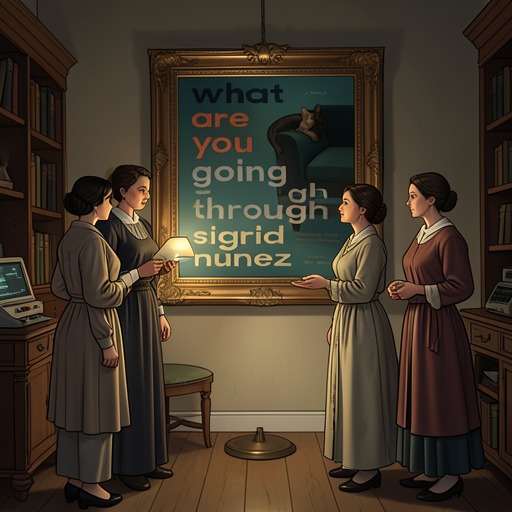
What Are You Going ThroughMemory’s dreamlike unreality is the narrator’s fear that the most powerful experiences may later feel as if they never truly occurred. It is not simply forgetfulness: the past remains emotionally alive, yet its vividness can become entangled with imagination until recollection seems less like a record than a dream. The narrator tests this unease against two scenes—the friend’s despair in the room and a later glimpse of her at a bedroom window—and finds that memory can preserve an experience while changing its shape.
The crisis that will not remain an idea
The concept first emerges in the immediate presence of the friend’s unhappiness. After a pause, the friend cries out that she has never been so unhappy and hates herself. The narrator’s thought of dying in despair turns the water in the room, in her perception, to ice. The thought is not allowed to remain a detached phrase: the narrator insists inwardly that this outcome must not happen, while the friend continues shrieking in distress. The scene makes the stakes of remembering plain. This is not an abstract meditation on how the past is represented; it begins in a moment that demands action from someone who is there to witness it.
The narrator answers that crisis by recognizing life as continuing despite everything: messy, unfair, and still requiring a response. The responsibility is personal and immediate. If the narrator does not deal with what is happening, she asks herself, who will? The later question of whether such an experience will become distant memory is therefore shadowed by the knowledge that it was once present and urgent. Retrospective unreality does not undo the event’s demands; it threatens to obscure how entirely real those demands felt at the time.
Intensity and the distance of the past
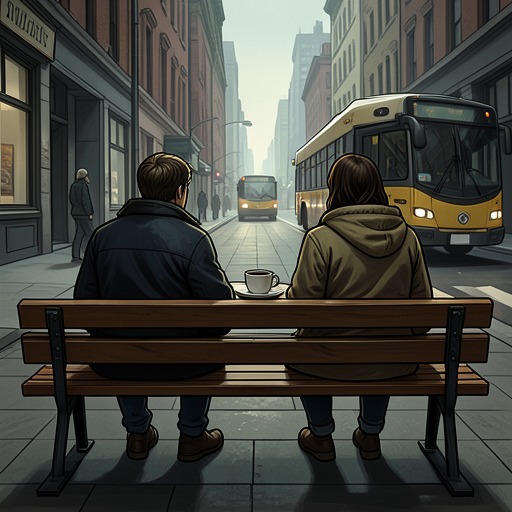
In a later reflection, the narrator imagines returning from errands and stealing a few minutes in a park before going indoors. Sitting on a bench, she usually cries. The ordinary shape of the scene—an errand, a pause, a public bench—holds an experience that is anything but ordinary to her. She laments that events of great force so often come to resemble dreams once they belong to the past. The problem is not that nothing happened, but that the mind’s later view can lay a surreal film over what happened, making real experience seem strangely unreal.
A coincidence in her reading gives this problem another form: a book compares watching someone die with falling in love. The narrator finds the comparison plausible and wonders whether another language might have a word for this particular kind of love, recalling onsra, a word associated with the Bodo people. The thought does not settle the difference between love and bereavement. Instead, it places the experience of watching a person die beside the intensity of falling in love, suggesting why an event might remain charged even as its pastness makes it difficult to trust as memory. What lasts is not a clean narrative distance but an experience still active in the person recalling it.
The narrator resists the consoling implication that life is merely a dream. She asks why so much that has happened should feel as though it did not truly happen, and calls the idea cruel. Her agreement with Graham Greene’s thought that another word is needed for the way people see past events that remain alive in them points toward the gap she cannot close: ordinary memory names the past, but not the peculiar persistence by which it continues to inhabit the present. The reflection also recalls Franz Kafka and Camus, linking this unstable sense of the past to the question of what keeps a person from killing herself. Memory’s unreality is thus set against the practical force of whatever enables continued living.
A glimpse altered by recollection
The clearest instance comes when the narrator sits in the park across the street from her friend’s building and scans its windows. After counting floors, she sees her friend standing at a sixth-floor bedroom window. From there, the friend would have had a good view of the park, but the narrator cannot tell whether she sees her. She appears to look into the distance rather than down at the street. The narrator considers waving, then realizes it is too late: the friend is gone.
The facts of the glimpse are brief and uncertain, but its remembered version grows more definite. The narrator says that imagination will become memory: again and again, she will recall her friend waving from the bedroom window. The recurring wave was not part of the observed scene. In the original moment, the narrator did not wave, and she could not establish that her friend had noticed her. Yet the imagined gesture takes on the authority of a repeated recollection. The passage makes memory’s dreamlike quality concrete: it can seem to return an encounter while quietly supplying an action that never occurred.
Remembering without certainty
The window scene begins an association with another woman the narrator knew briefly years earlier. The connection is made by the glimpse itself, rather than by proof that the two women or their lives are alike. The narrator’s account thereby shows memory moving through resemblance: an image in the present calls up someone from the past, and the act of recollection opens a path into a different story. The friend’s window remains both a specific sight and the point from which the narrator’s mind turns elsewhere.
Across these scenes, the concept holds together two opposing qualities. The past is not inert: the narrator cries in the park, returns repeatedly to the imagined wave, and recognizes that experience remains alive within memory. At the same time, recollection cannot guarantee that what feels vivid is exactly what happened. By openly distinguishing the actual glimpse from the wave she later remembers, the narrator does not resolve that instability; she makes it visible. The result is a form of witness that preserves both the event and the uncertainty that gathers around it, refusing to treat dreamlike recollection as evidence that the experience was unreal.